When fluent AI suddenly falls apart
You’ve probably seen it: an AI that drafts crisp emails in English suddenly produces stiff, error-prone sentences in a language you speak at home. It may translate common phrases acceptably, then fail on names, honorifics, or everyday slang, swapping meanings or inventing details. The shift can feel random, but it follows a pattern: the model is confident because it has learned the shape of “good writing,” not because it understands your language equally well.
This matters because fluency can mask fragility. A chatbot that sounds smooth may still mishandle dates, negation, or sensitive terms when the language is rarer, more dialect-heavy, or written in a less common script. Fixing that isn’t free: collecting data, building tests, and involving speakers takes time, money, and careful consent practices.
Not enough data, and the wrong kind
Imagine trying to learn a language from a handful of glossy brochures and a few formal speeches. You might sound polished in set phrases, but you’d miss how people actually talk, joke, argue, and correct each other. Many low-resource languages face the same problem in AI training: there’s simply less text available, and what exists is often skewed toward religious materials, government documents, newswire, or standardized writing that doesn’t match everyday conversation.
That mismatch shows up as awkward word choice, overly formal tone, and errors on practical tasks like customer support, health information, or local education content. Even when “more data” exists, it may be locked behind paywalls, scattered across private chat groups, or embedded in audio rather than text. Turning it into usable training material requires transcription, cleaning, and permission—real costs that don’t scale like scraping the open web.
With thinner coverage, evaluation is thinner too. Models can look fine in demos because no one is measuring the hard cases speakers actually care about.
Tokenization and scripts create hidden barriers

Even with decent training data, some languages start at a disadvantage because of how text is chopped into pieces before the model learns. Most systems don’t read “characters” or “words” directly; they read tokens. If the tokenizer was tuned on languages that use spaces and familiar alphabets, a language with complex morphology, diacritics, or no whitespace can get split into long, unnatural fragments. The model then has to spend more effort just reconstructing basic word shapes, leaving less capacity for meaning, grammar, and style.
Scripts add another quiet hurdle. If a language is written in multiple scripts (or mixes Latin with a local script), the same word may appear in several forms that look unrelated to the model. Small differences in Unicode normalization, missing diacritics, or keyboard-driven spelling conventions can create “new” tokens the model barely saw in training. Fixing this can require retraining tokenizers, adding script-specific normalization, and rebuilding evaluation sets—work that is technical, time-consuming, and easy to under-budget.
Dialects, spelling variation, and code-switching
In real use, people rarely speak the “textbook” version of a language. They write the way they talk, or the way their region talks, and those differences can be large enough that an AI treats them like separate languages. A model trained mostly on standardized spelling may stumble on dialect vocabulary, local idioms, or grammatical patterns that never appear in formal writing. Even small shifts—dropping diacritics, using phonetic spellings, or borrowing slang from a neighboring language—can push the input off the model’s well-lit path.
Code-switching makes this more visible. Many bilingual communities mix languages within a sentence, especially for technical terms, jokes, or social cues. If training data mostly keeps languages in separate buckets, the model may “snap” to the wrong language mid-answer, translate words that should stay as-is, or miss what the switch signals about tone and intent. Handling this well often requires collecting dialect-heavy, mixed-language examples and labeling them carefully, which is slow and can raise privacy concerns when the most natural data comes from chats.
Culture and context the model never learned
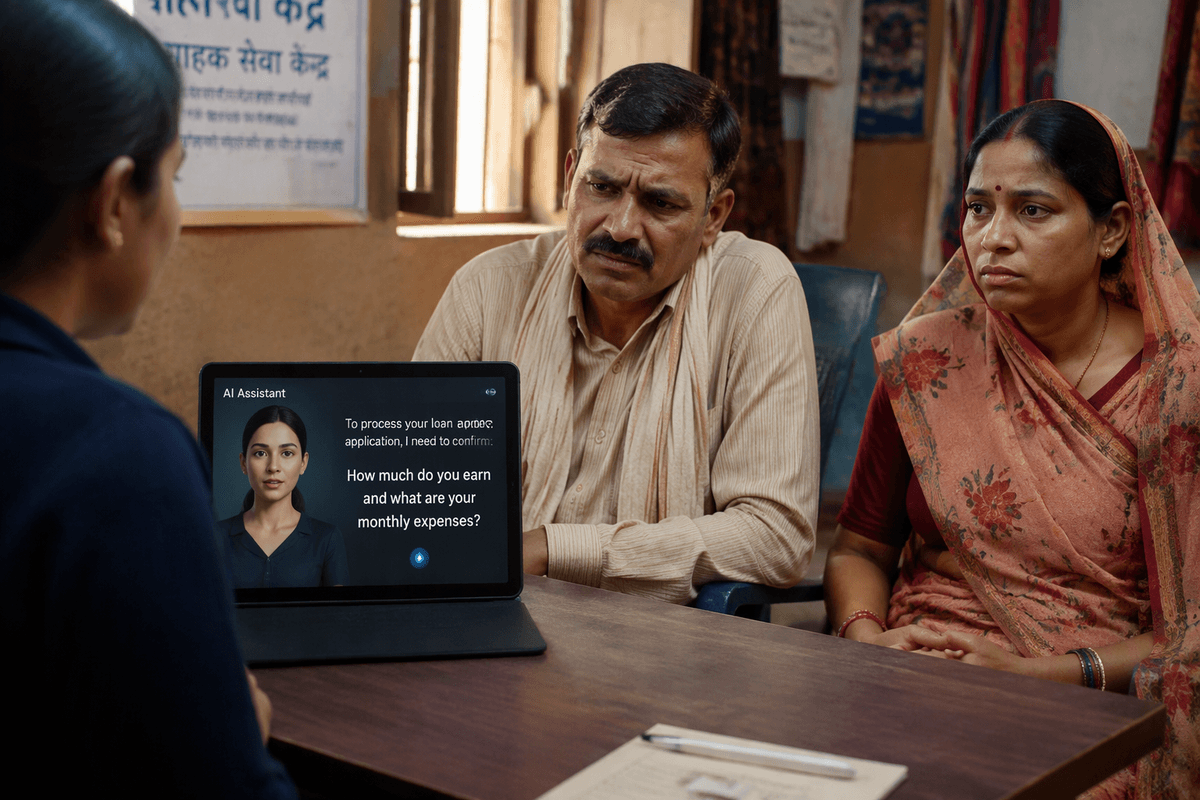
A familiar failure is when the words are “correct,” but the message lands wrong. The model may choose a direct phrasing where politeness normally relies on indirection, or it may miss that an honorific changes the whole social meaning of a request. It can also mishandle culturally loaded categories—kinship terms, clan or caste references, religious greetings, taboos, or local place names that carry political implications—because those patterns are underrepresented or filtered out in the data it saw.
Context gaps show up fastest in practical domains. In health, agriculture, or legal help, local institutions, calendars, measurement units, and common abbreviations matter as much as grammar. A model trained mostly on global web text may default to the wrong assumptions, then fill in details smoothly. Closing this gap is not just “add more text.” It often requires community-reviewed datasets, regional style guides, and careful decisions about what should not be generated at all, which adds cost and slows deployment.
Why we don’t notice failures until deployment
People best equipped to identify language-specific errors are not always included in early product testing. Internal evaluations tend to rely on English-heavy benchmarks, translated test sets, or a few basic prompts designed to check whether the model works at all. Such tests leave important weaknesses undetected, including regional spellings, mixed-script text, informal conversation, and local terminology used in schools, clinics, and public services. Subtle errors are particularly difficult to catch. When an answer sounds fluent but contains a small factual or linguistic mistake, reviewers may blame the user’s wording rather than recognize a flaw in the model.
Product feedback channels also tend to filter out these problems. In languages with relatively few users, bug reports arrive less frequently, often much later, and may lack enough detail for teams to reproduce the issue. Automated metrics and crowd testing are cheaper to run in widely spoken languages, while recruiting fluent reviewers across different regions takes more time and money. As a result, deployment may become the first real test of how the model handles code-switching, local names, and sensitive situations. What looked like a minor wording mismatch during development may undermine trust or cause real harm once people rely on the system.
What actually helps low-resource languages improve
A real improvement plan usually starts with better coverage, not clever prompting. That means collecting consented text and speech from the domains people actually use—support chats, local curricula, clinic FAQs—then paying fluent speakers to clean, label, and review it. Narrow fine-tuning on that material can beat a generic “multilingual” model, but only if the evaluation matches reality: dialects, mixed scripts, and code-switching, measured before release and monitored after.
When budgets are tight, translation pivots can help, but they add latency and compound errors across steps. The practical baseline is simple: decide what the system must do reliably, add tests for those cases, and be willing to limit features until the language truly holds up.