Why research assistants feel like a time cheat
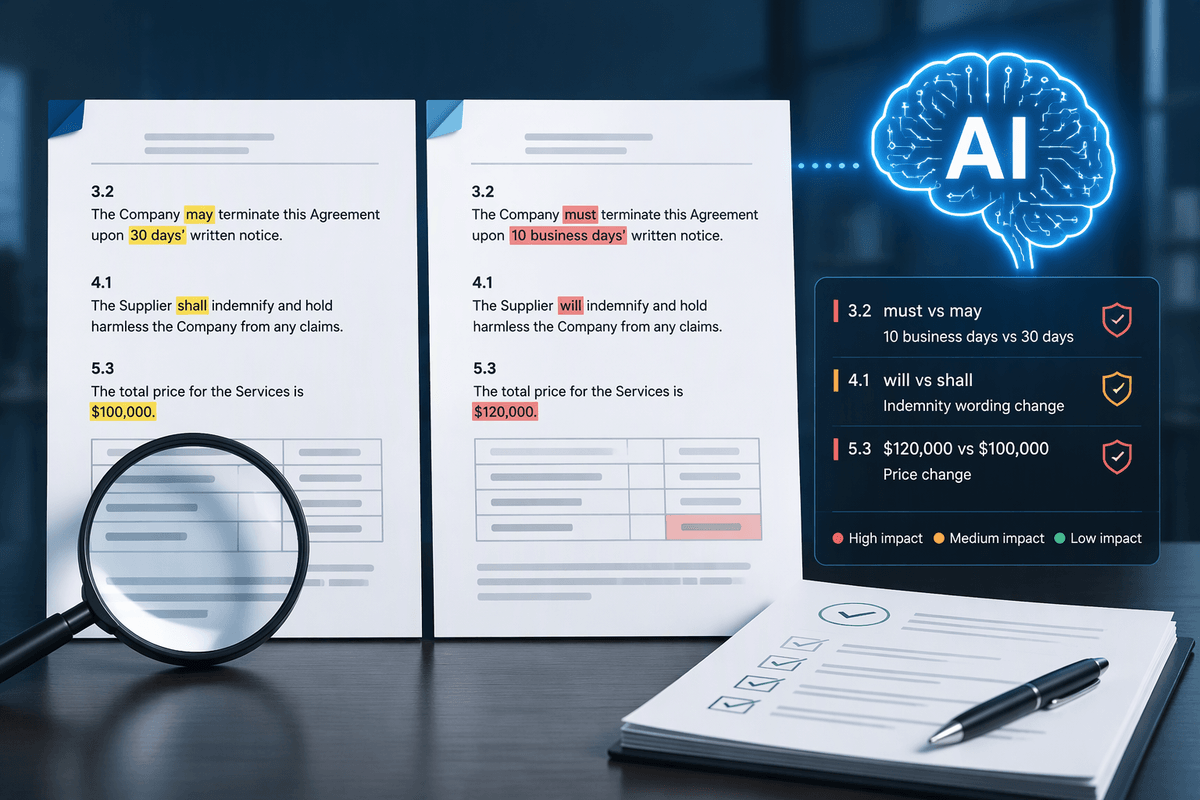
You paste a question, hit enter, and a few seconds later you have a clean summary, a shortlist of “key points,” and citations that look like the footnotes you’d have produced after an afternoon of reading. That speed feels like a time cheat because it collapses three steps—searching, skimming, and synthesizing—into one output that’s already shaped like a deliverable.
The interface makes the hard parts look finished. You don’t see the missed counterarguments, the older sources outranking newer ones, or the subtle claim that got upgraded into a “fact.” The real savings come when you treat the draft as a map: helpful for direction, but not safe to drive at full speed without checking the turns that matter.
The hidden costs of trusting citations too quickly
Citations may look convincing until someone asks where the source actually supports a claim. A summary gets forwarded, a quotation goes into a presentation, or a blog draft moves toward publication, only for a reviewer to discover that the evidence does not match the wording. The damage goes beyond the time spent reopening sources and checking details. Once one claim proves unreliable, stakeholders may start questioning the rest of the work as well.
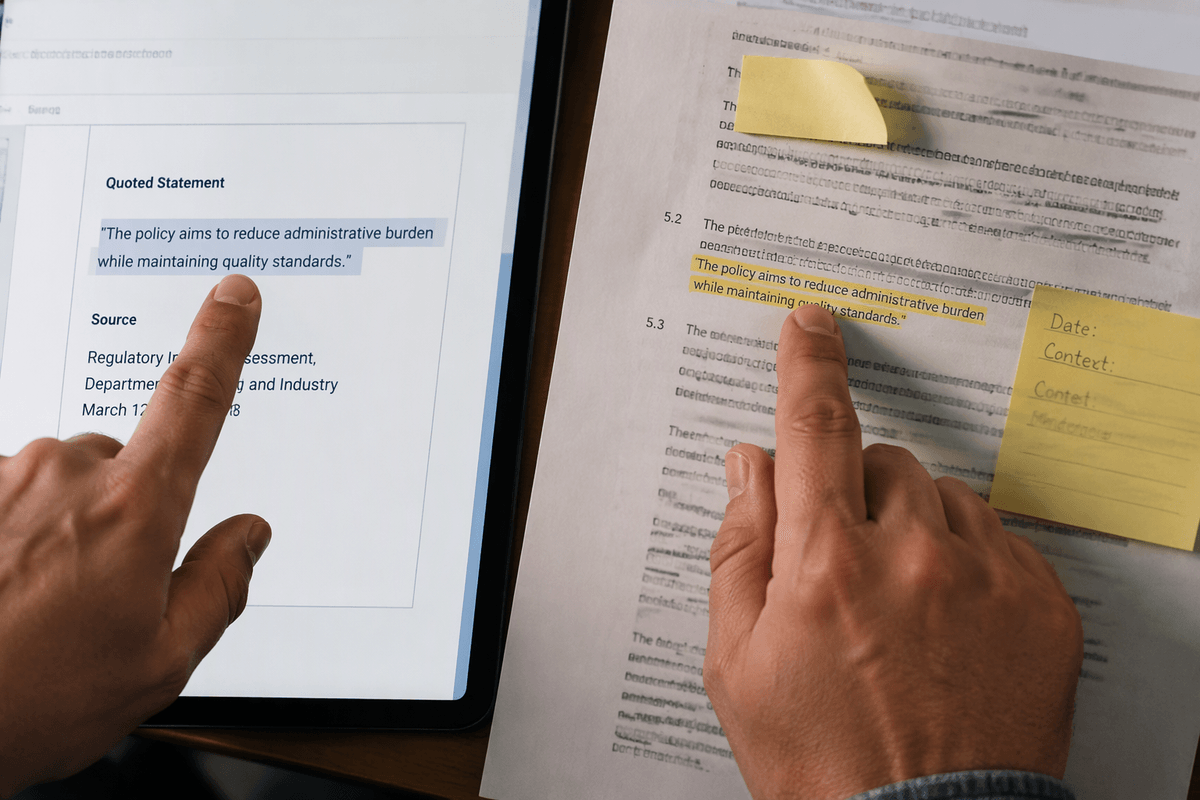
Citation errors are not always obvious. A referenced page may discuss the same topic without supporting the specific statement. A quotation may be genuine but misleading because the preceding sentence sets an important limit. Sometimes the cited material is a secondary report that has already rounded figures or simplified the original findings. Even a source that was accurate when published may be unsuitable for a current decision if important details have changed since then. Checking a citation therefore means more than confirming that the source exists; the wording, context, figures, and publication date must all support the claim being made.
Decide what “verified enough” means for you
You can’t verify everything, so the real skill is choosing what “verified enough” means before you’re under deadline pressure. Start with the use case: are you making an irreversible decision, publishing a public claim, or just orienting yourself? The higher the blast radius, the closer you need to get to primary sources and original wording.
A simple rule set helps. For internal brainstorming, you might only sanity-check the big numbers and definitions. For client work or anything reputational, verify every quantitative claim, every “X causes Y” statement, and any quote that carries authority. For regulated, legal, medical, or safety-adjacent topics, treat verification as mandatory and assume you need the exact passage, date, and context—not a paraphrase.
Write down your confidence label when you share: “unverified draft,” “checked key claims,” or “source-confirmed.” It keeps you honest and makes review faster.
A practical workflow: from AI output to checked sources
A polished answer with five bullet points and eight citations may look ready to use, but its claims still need to be checked. Begin by identifying the statements that may be repeated directly, especially figures, dates, rankings, causal claims, and strong recommendations. Copy them into a separate document and number each one. Prioritize claims that could affect the decision or shape the reader’s understanding; anything too minor to verify should not be presented as a central finding.
Trace each important claim to the strongest available source. Open the citation, search for the relevant wording, and confirm that the passage supports the claim, uses the same measurement definition, and comes from an appropriate publication date. When an answer cites a blog post summarizing a report, consult the original report. When it refers to an abstract, look for the full paper or underlying dataset. Save a brief supporting excerpt in your notes alongside the author and publication date. This record makes it easier to explain the evidence without repeating the entire search.
Keep track of claims that remain unverified. Uncertainty should affect how they are presented: qualify the wording, narrow the claim, or remove it when the evidence is insufficient. This approach preserves much of the speed of AI-assisted research while ensuring that important statements rest on sources that can withstand scrutiny.
Fast verification tactics that don’t slow you down
You can stay fast by verifying with intention instead of thoroughness. Start by checking the “shape” of the source before you read: publication date, author/org, and whether it’s primary (report, paper, dataset, filing) or commentary. If the decision depends on freshness, don’t read anything until you’ve confirmed the date is within your acceptable window.
Then use targeted spot-checks. Search within the source for the exact number, proper noun, or quoted phrase. If you can’t find it in under a minute, treat it as unsupported and either soften the wording (“suggests,” “reported by”) or cut it. For statistics, validate the denominator and definition (per year vs. per quarter, global vs. US-only, sampled population). For quotes, read one paragraph above and below to catch constraints, caveats, or a different meaning.
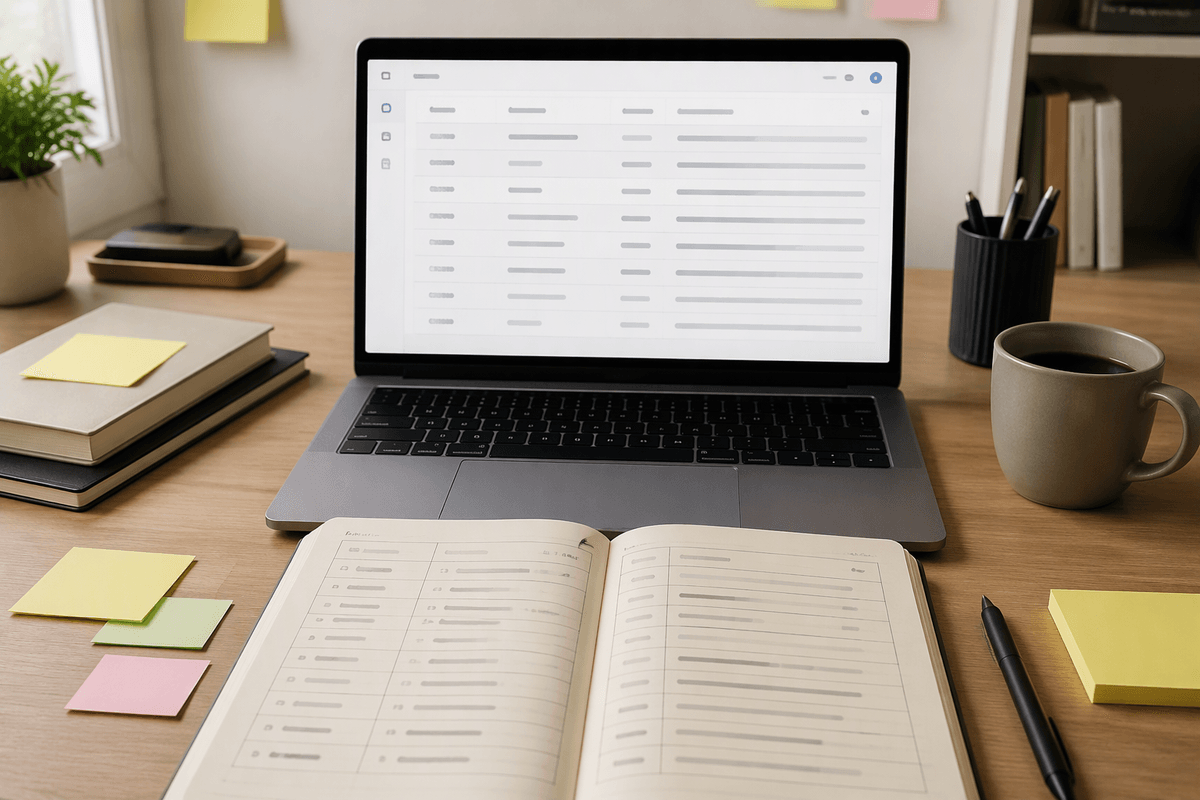
Keep a lightweight evidence log: claim → source title → date → one-line support. The overhead is small, and it prevents the slowest part of verification: re-finding what you already checked.
When you should distrust the whole answer
Some answers are too unreliable to fix through a few isolated checks. Broken citations, inaccessible sources that provide no supporting context, or pages that never mention the relevant terms all raise questions about the research behind the response. Be equally cautious when an answer gives precise percentages, rankings, or named studies but relies on vague secondary sources that do not substantiate those details.
Contradictions within the answer are another warning sign. A summary may acknowledge mixed evidence yet end with an unequivocal recommendation, or rely on data from before 2020 to support a decision in 2026 without accounting for subsequent changes. When several major claims fail an initial spot-check, verifying every sentence becomes an inefficient use of time. Start again with a narrower question, locate two primary sources, and ask the assistant to summarize those specific documents. Working from evidence you have already examined is more reliable than trying to repair a synthesis whose underlying research may be flawed.
Use AI for speed—keep verification as the guardrail
You don’t have to choose between speed and rigor. Use the assistant to compress the first 80%: generate an outline, surface candidate sources, and produce draft language you can react to. Then treat verification as a guardrail that only touches what could hurt you—numbers, dates, quotes, causal claims, and anything you’ll repeat with confidence.
In practice, that means you ship fewer “perfectly sourced” sentences, but the ones you do ship are defensible. The constraint is real: primary sources take time, and some are paywalled or messy. Plan for that by keeping claims narrow, labeling confidence, and saving your deep reads for the decisions that can’t be undone.