Why diagnosis feels harder than it used to
You can feel it on a normal day: the same “runs rough” or “battery light on” ticket now turns into a longer hunt. Vehicles have more modules, more network traffic, more sensors, and more software-driven strategies that can mask a failing part until the right conditions line up. A weak ground might show up as a U-code, a drivability complaint, and a random ADAS warning—depending on what woke up first.
The other pressure is time. Customers expect fast answers, parts are less predictable, and comebacks cost more than ever. Add intermittent faults and aftermarket history, and it’s easy to spend an hour proving what the car won’t do in the bay. That’s where organized data use—and carefully used AI—can start earning its keep.
Turning driver symptoms into a focused test plan
A driver rarely describes a failure mode; they describe a moment. “Stalls at stoplights when it’s hot,” “won’t start after fuel,” “buzzes at 55 and the cruise drops out.” If you treat that as a story instead of a symptom set, you end up shotgun-testing. The faster move is to translate the complaint into conditions, triggers, and what changed: temp, load, speed, gear, wet/dry, fuel level, recent work, warning lights, and whether cycling the key resets it.
AI helps here when you feed it structured inputs and ask for a short list, not a diagnosis. Give it the exact words from the customer, the vehicle details, and the conditions that make it happen, then ask for: three to five likely systems, the quickest discriminating tests, and what data PIDs or mode $06 monitors would confirm or rule each one out. You still verify with service info and your own baseline checks, but it can cut the “what do I test first?” time. The limitation is garbage in, garbage out—vague complaints or missing context will produce confident-sounding noise.
Getting more value from scan data and freeze frames
You’ve already seen the pattern: two cars with the same code can have totally different stories once you look at what the module saw when it set. Freeze frames and extended data are where the story usually gets honest—RPM, load, fuel trims, coolant temp, battery voltage, gear, and whether it happened on a cold start, a tip-in, or a long idle. Instead of clearing everything and “seeing what comes back,” save screenshots, export the scan session, and label it by conditions. That gives you something to compare after a road test or after a repair.
AI earns its keep when you hand it that snapshot and ask it to organize, not guess. Paste the freeze frame values, pending/history codes, readiness, and any Mode $06 outliers, then ask: what’s abnormal for these conditions, which PIDs should be graphed together, and what would a known-good trace look like. The constraint is time and tool variation—some platforms hide data, some scan tools translate it differently, and garbage scaling will mislead both you and the AI.
Learning from patterns: TSBs, forums, and shop history
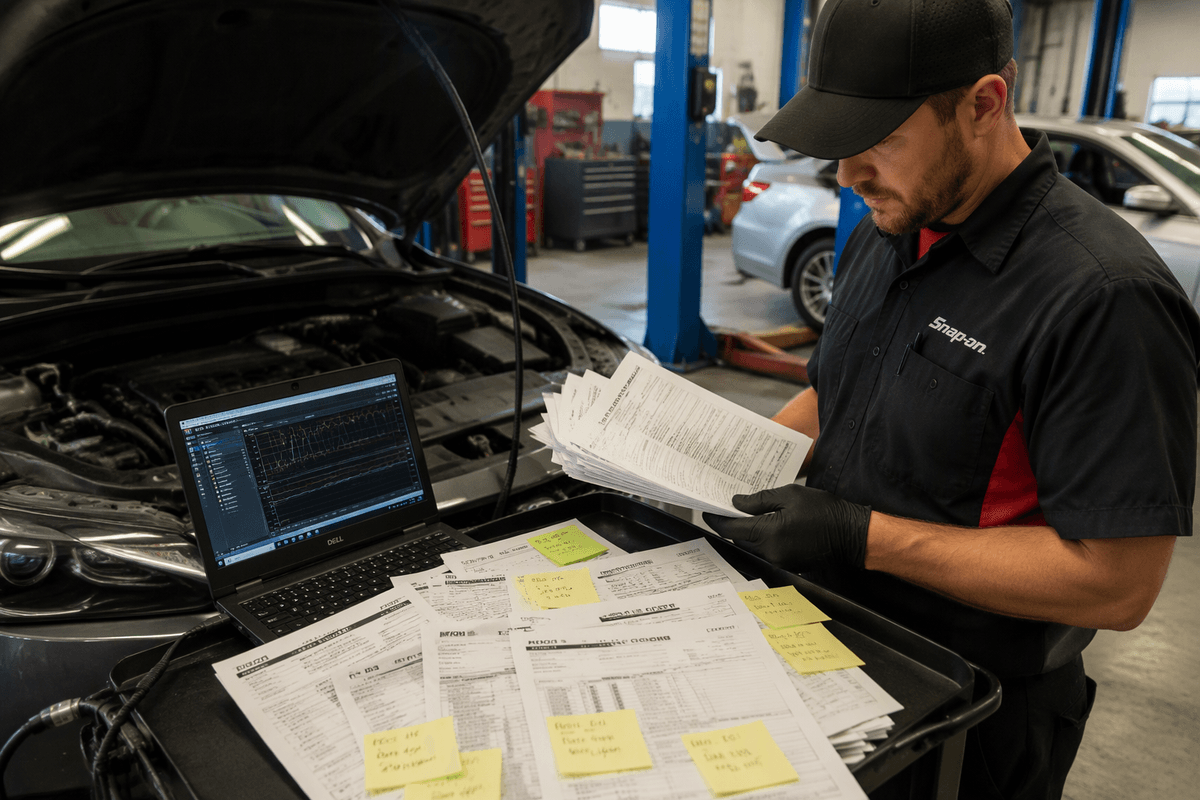
After the same vehicle platform returns for the third time with a familiar customer complaint, one recurring code, and two secondary codes that may be misleading, diagnosis starts to depend more on recognizing patterns than on theory alone. Technical service bulletins (TSBs), repair forum discussions, and shop history help narrow the search by showing how faults appear under real-world conditions. This evidence is especially useful for intermittent problems that refuse to reproduce during testing.
AI helps organize those patterns when given the year, make, model, engine, exact diagnostic trouble codes (DTCs), and conditions recorded on the repair order. Ask for a ranked list of known issues, their characteristic symptoms, and the quickest checks to confirm each possibility. Verify every relevant suggestion against OEM service information and the original TSB. Forum posts provide useful clues, but differences in engine configurations, missing details, and unsupported parts replacements can lead diagnosis in the wrong direction. Shop repair-order notes are equally valuable when recorded consistently and made searchable. Otherwise, recurring patterns may remain buried in past records, costing time whenever the same fault returns.
Planning repairs with fewer surprises at teardown
You’ve probably had the job that “should be” a quick part swap, then turns into broken connectors, missing fasteners, oil-soaked harnesses, or a timing cover that won’t clear because someone used the wrong mount bolts last time. The surprise isn’t just inconvenience—it’s cycle time, rental days, and the awkward call to reset expectations. The goal before teardown is to turn suspicion into a parts-and-labor plan that accounts for what commonly goes wrong on that platform.
AI can help you pre-build that plan if you feed it the facts and ask for risks. Give it the vehicle, the confirmed fault, what access path you expect, and any prior-work clues. Ask for: common “while you’re in there” items, one-time-use hardware, seals that typically leak after disturbance, special tools, torque-angle steps, fluid specs, relearn procedures, and post-repair validations. Use service info to verify everything, but the checklist can prevent the second parts order.
The estimates and authorization still need your judgment. If AI recommends extras, tie each one to a clear failure risk or known service requirement, or it becomes padding instead of prevention.
Where AI can go wrong in the bay
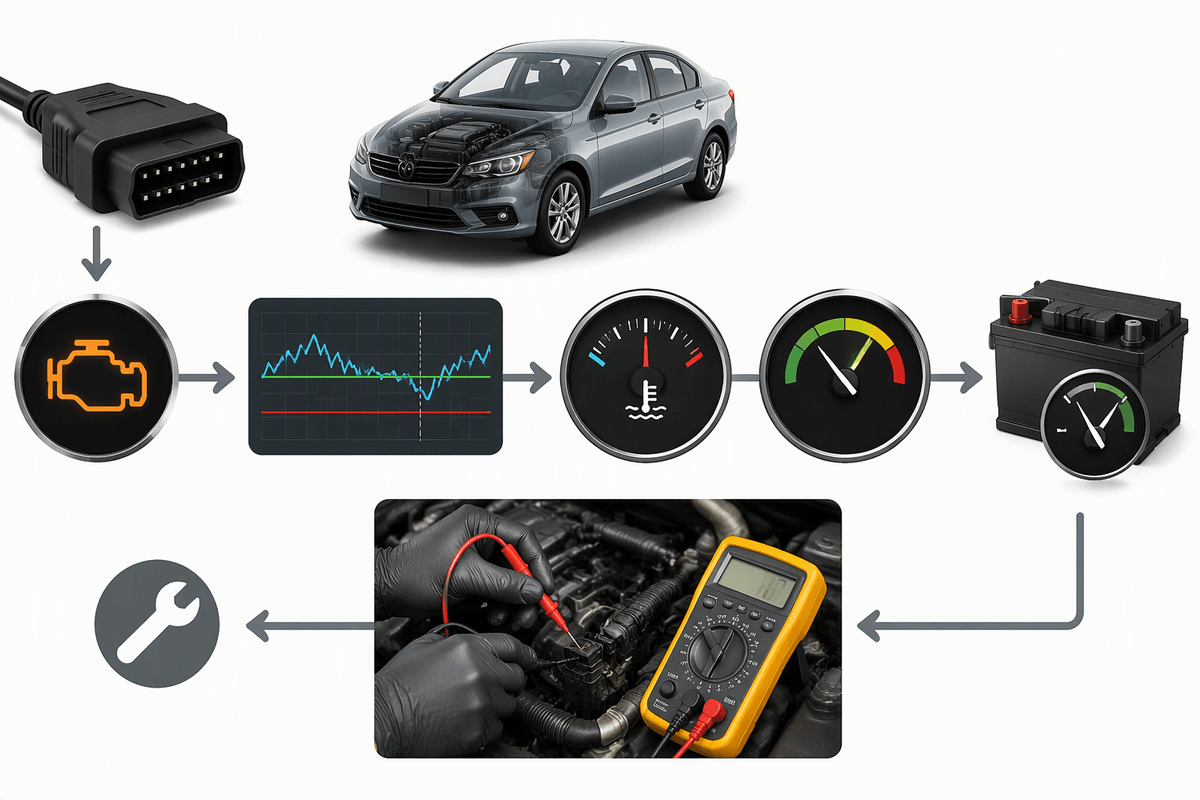
You’ll notice the failure mode fast: AI will sound certain even when the inputs are thin or wrong. If you paste “P0300, runs rough” and don’t include fuel trim behavior, coolant temp, load, battery voltage, and whether it’s hot restart or cold start, it can steer you toward coils and plugs when the real problem is voltage drop, a skewed MAF, or a valve timing issue. It also can’t see the car. It won’t catch the rubbed-through harness behind the bracket, the aftermarket splice, or the pin fit that only opens up under vibration.
The other trap is treating it like service information. Torque specs, connector pinouts, fuse locations, relearn steps, and even option content can be wrong or mixed across model years. If you follow a confident-sounding procedure without verifying, you can create a new problem and own the comeback. AI can suggest where to look and what to compare, but you confirm with OE info, measured values, and a test that would still convince you if the tool was turned off.
A practical way to start using AI today
A simple way to start is to use AI as your “second set of eyes” before you touch the car and after you capture data. Build a shop prompt template: vehicle, customer conditions, DTCs, freeze frame highlights, what you already checked, and the exact question you want answered (rank likely systems, give two confirming tests, list the PIDs to graph). Save the output to the RO as a hypothesis list, not a conclusion.
Keep it contained: one tech owns verification, OE service info stays the authority, and you don’t order parts until a test result points somewhere. The real cost is discipline and time upfront, but it pays back in fewer dead-end checks and cleaner customer updates.