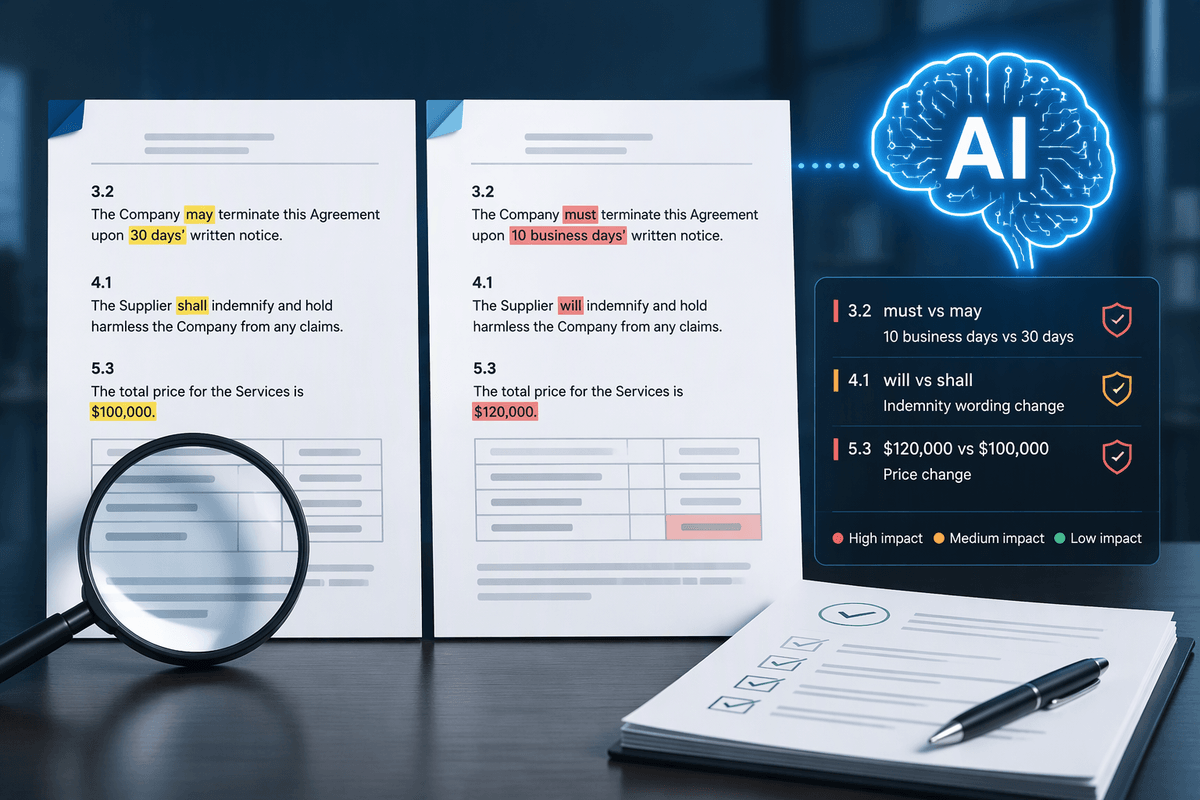
Why tiny prompt tweaks change everything
You’ve probably seen it: one version of a prompt produces a crisp, useful answer, and a nearly identical version produces something vague, overconfident, or off-topic. That swing isn’t random so much as it’s a sign you’re operating near the edge of what the model can reliably infer from your instructions and context. Small wording changes can shift what the model treats as the goal, what details it prioritizes, and how much it “fills in” gaps.
Because the model is predicting the most likely continuation of your text, tiny cues like “be brief,” “step-by-step,” or “for a beginner” can reroute the entire completion. These cues don’t just add constraints; they can also remove options the model used to stay accurate, like acknowledging uncertainty or asking clarifying questions, which makes outputs feel inconsistent under real work pressure.
The kinds of “small changes” that expose brittleness
One easy way to spot brittleness is to make “harmless” edits that shouldn’t change the task, then watch whether the output changes anyway. Swap a couple of synonyms (“summarize” vs. “recap”), reorder constraints (“use bullets” before or after “be accurate”), or move a key detail from the first sentence to the last. If the model suddenly drops requirements, changes its recommendation, or invents missing context, you’ve learned it was leaning on shallow cues rather than a stable understanding of the request.
Formatting and audience nudges are especially revealing. Ask for the same answer as a table instead of prose, or “for an executive” instead of “for an intern,” and see whether factual content stays consistent. Another high-signal tweak is tightening the output limit (a 6-bullet cap, 120 words, one paragraph). A model that becomes vague or confidently wrong under these constraints may be using verbosity as a crutch, which is a real cost when you need reliable, compact outputs in production.
What failure modes each tweak is testing

When a synonym swap changes the conclusion, you’re often testing goal drift: the model is latching onto a familiar phrasing pattern instead of the underlying intent. Moving a key detail from the first line to the last tests attention and prioritization. If the model “forgets” a constraint you didn’t remove, it may be over-weighting early instructions, under-weighting later ones, or simply failing to keep all requirements active at once.
Changing format (table vs. prose) probes whether the model can preserve meaning while translating structure. If facts shift, it’s a sign the model is reconstructing the answer from scratch rather than re-expressing the same content. Audience tweaks (“executive” vs. “intern”) test whether the model can adjust tone and depth without smuggling in assumptions. If it starts inventing company specifics or “obvious” business context, that’s confabulation: filling gaps to sound coherent.
Tight word limits and bullet caps test compression. A common failure mode is replacing precision with slogans, skipping caveats, or overstating certainty because hedging takes space. That trade-off matters in real workflows, where short outputs are often the only ones anyone reads.
A quick stress-test you can run in minutes
You can run a fast stress-test with one “anchor prompt” and five small variants that preserve the same task. Start with a prompt you actually use at work, then lock the input content (same doc, same data, same question). Generate a baseline answer. Now rerun with: (1) a synonym swap for the main verb (“analyze” vs. “evaluate”), (2) the key constraint moved to the end, (3) the same request forced into a table, (4) a hard cap (100–120 words or six bullets), and (5) an audience shift (“for a VP” vs. “for a new hire”).
Score each output on three checks: did it follow every constraint, did the core facts/recommendation stay stable, and did it introduce new unstated assumptions. Log failures with short labels (goal drift, attention drop, format reconstruction, compression hand-waving, confabulation). The five reruns adds up, so keep this for high-impact prompts you plan to reuse or ship.
Separating model limits from prompt mistakes
When an output fails, the first question is whether you actually gave the model what it would need to succeed. If two “equivalent” prompts produce different answers, check whether one version quietly changed the available evidence. Did you remove a definition, a time range, or an example? Did a formatting request (“table”) force the model to omit citations, edge cases, or intermediate reasoning it was using to stay grounded? Many “model failures” are really underspecified tasks where the model is choosing a plausible interpretation, then sounding certain because the prompt asked for decisiveness.
A useful divider is to separate “can’t” from “didn’t.” If you provide the same inputs, explicitly forbid invention (“If missing, say ‘unknown’”), and the model still produces contradictions or fabricates specifics, you’re likely at a capability limit for that task, that context length, or that level of precision. If it succeeds as soon as you add a short rubric, an example answer, or a clearer success criterion, it was a prompt mistake. This diagnosis takes extra runs, and you won’t do it for every chat—reserve it for prompts you plan to reuse, automate, or trust for decisions.
Turning fragile prompts into reliable product behavior

In a product setting, you don’t get to rely on a “magic phrasing” that only one person remembers. Treat the prompt like an interface: make the goal explicit, list non-negotiable constraints as a short checklist, and define what to do when information is missing (“If X isn’t in the input, write ‘unknown’ and stop”). Lock down the output shape with a schema-like structure (headings, fixed fields, or a small table) so reviewers can spot drift fast. If the model tends to invent details, require a “source line” for each key claim that points back to the provided text or dataset, and reject claims that can’t be grounded.
Reliability improves when you move “cleverness” out of the model and into the workflow: prefill context, provide examples, and add a second pass that checks constraints before finalizing. The extra steps mean extra calls—so reserve strict guardrails for high-impact outputs like customer-facing text, metrics summaries, or decisions that trigger actions.
Use prompt sensitivity as an evaluation habit
Watch how a model behaves under small, “shouldn’t-matter” variations the way you’d watch a feature under minor input noise. Keep a tiny regression set of your highest-stakes prompts (the ones that drive decisions, send messages, or summarize numbers) and rerun them whenever you change wording, add context, or switch models. If a harmless edit flips recommendations, drops constraints, or adds invented specifics, treat that as a reliability signal, not a one-off annoyance.
Over time you’ll learn which tasks need guardrails, which need verification, and which you should stop delegating. The constraint is overhead: extra runs cost time, tokens, and attention, so spend this effort where failure is expensive.