Why local recommendations fail in real life
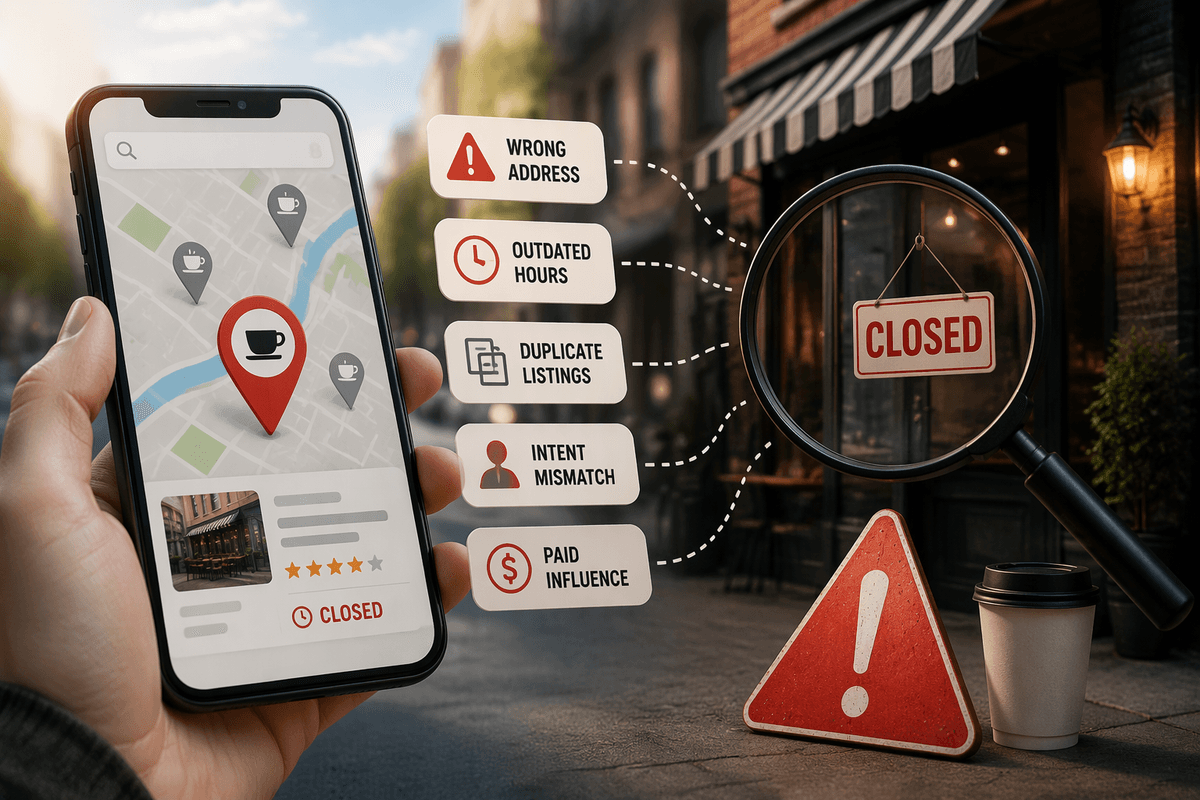
A customer searches “coffee near me,” and the app sends them to a café that’s closed, across a river, or not actually a café. That isn’t just bad luck. Local recommendation systems stitch together map pins, business names, categories, hours, reviews, photos, and location signals, then try to guess what the person wants under time pressure. Small errors compound: one wrong suite number can look like a different store, and one outdated holiday schedule can override everything else.
For owners, the frustration is the lack of a single “control knob.” Fixes often require tedious listing cleanup, repeated edits across platforms, and waiting for reprocessing. Even then, your business competes with popularity signals, proximity, and occasionally paid placements, so being correct doesn’t always mean being shown.
Data problems: stale listings, duplicates, and bad attributes
A familiar failure mode is simple: the data is wrong or split. Many platforms still carry stale hours, old phone numbers, or a pre-move address that “looks” valid because it matches older directories. If your holiday hours are updated in one place but not another, the system may average or prioritize the older source, so customers see “Open” when you’re not.
Duplicates are the quiet killer. A second pin created by a customer, a legacy listing from a previous tenant, or a near-identical entry from an aggregator can divide reviews, clicks, and check-ins, making each version look less trustworthy. Bad attributes add another layer: “wheelchair accessible,” “dine-in,” “appointment required,” “serves breakfast,” or the wrong primary category can push you into irrelevant searches. Fixing these issues is tedious because merges and edits can take days or weeks to propagate.
Intent mismatch: what the user meant vs asked
Even with perfect listings, recommendations break when the platform misreads the customer’s intent. People search in shortcuts: “best brunch” might really mean “walk-in, fast seating, kid-friendly,” while “coffee” could mean “drive-thru” or “quiet laptop spot.” The system often treats the literal words as the goal and uses proxies like category tags and review language to guess the rest. That’s how a bakery with great espresso gets shown for “café,” or a bar with “brunch vibes” reviews outranks a true breakfast place.
Intent mismatch also shows up in time and purpose. “Open now” can be interpreted as “open within the next hour,” and “near me” can prioritize travel time by car even when the user is walking. Owners have limited control, but you can reduce ambiguity by tightening categories, adding accurate attributes, and prompting reviews that mention concrete use-cases (takeout speed, quiet seating, late hours). The cost is ongoing: wording and expectations shift, and platforms re-interpret signals without warning.
Ranking drift: popularity, proximity, and paid influence

A customer can type the same query two days in a row and get a different set of “top” results, even if nothing about your business changed. That’s ranking drift: the platform continuously re-weights signals like recent clicks, driving directions, saves, call taps, and “open now” availability. A place that’s slightly farther away can leapfrog you because it’s getting a burst of attention from tourists, a local event, or a viral post. Proximity also isn’t as simple as distance; some systems favor travel time, major roads, or where the user “usually” goes, which can quietly sideline businesses in less obvious pockets.
Paid influence adds another layer. Sponsored placements can look like organic recommendations, and even when clearly labeled, they still change what people click—feeding popularity loops that keep the same winners on top. You can’t “fix” drift with one edit. You can only make your signals harder to ignore: consistent hours, strong photos, accurate attributes, and steady engagement that doesn’t depend on short-lived spikes.
Review and content bias that warps the output
Business owners sometimes find that visibility on review platforms reflects reviewer activity as much as the quality of the experience they provide. Platforms rely on review text, average star ratings, photo counts, and recency because these signals are readily available and easy to compare. The result can favor businesses that generate frequent reviews, such as tourist destinations, busy chains, and venues that regularly encourage customers to leave feedback. Long-standing neighborhood favorites may appear less relevant simply because fewer customers post about them, even when their regulars remain loyal.
The wording of reviews can also shape how a business appears in search results. Repeated mentions of terms such as “gluten-free,” “vegan,” “late-night,” or “fast” may steer a listing toward searches that do not fully match its offerings. Missing those terms may also limit its visibility for relevant queries. Photos influence perception in much the same way: prominent cocktail images, for example, may lead users to associate a restaurant more closely with bar-related searches. These patterns can shift over time, but changing the mix of reviews and images takes patience. Pressuring customers to use specific phrases or leave more reviews may also violate platform rules or damage trust.
Safety and compliance mistakes you can’t ignore
A customer who gets sent to the wrong place is annoying; a customer who gets sent into a safety or compliance problem is worse. Platforms sometimes surface businesses with restricted services or age requirements to broad queries, or mislabel “appointment only” and “members only” as walk-in friendly. In health-adjacent categories—pharmacies, clinics, supplements, childcare—bad hours, wrong phone routing, or a mixed-up address can push people to act on outdated information. Even “delivery available” can become a safety issue when the system confuses a third-party courier service with your actual capabilities.
Owners also get exposed on the other side. Listing edits, photos, and review prompts can cross platform rules around regulated goods, medical claims, alcohol, pricing disclosure, and incentivized reviews. The compliance fixes usually move slower than ranking tweaks: suspensions, unverified attributes, and disputed edits can take days to resolve. Treat high-risk fields—hours, category, services, and restrictions—as “must be correct,” and audit them more often than your marketing copy.
Reducing errors: monitoring, feedback loops, and guardrails
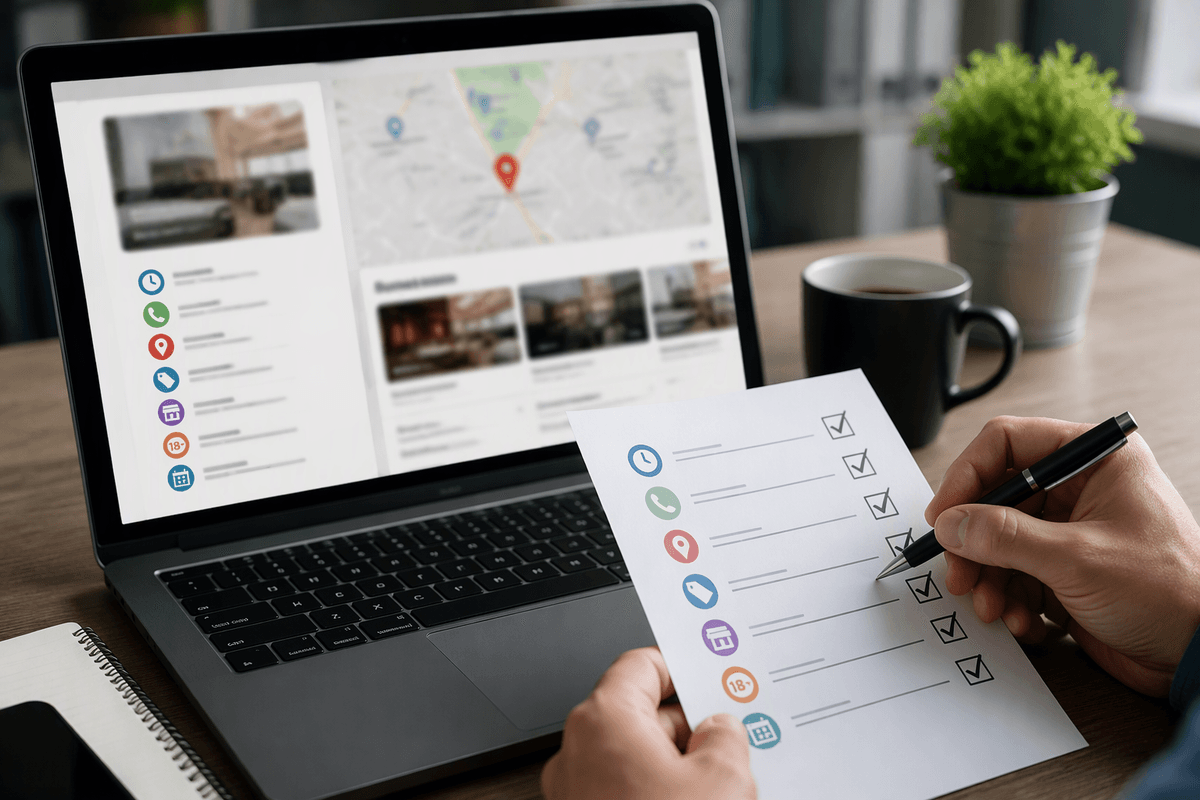
You’ll feel more in control once you treat recommendations like an always-on channel you monitor, not a one-time setup. Build a simple weekly checklist: search your top 5 queries from a few nearby locations, confirm pin placement, hours, primary category, and the “Open now” status, then screenshot anything wrong. Track duplicate sightings, misroutes, and “wrong type of business” impressions in a shared log so patterns are obvious.
Create feedback loops that platforms can actually absorb: consistent NAP across directories, prompt edits on every major app, and reviews that mention specific services and constraints (“walk-in only,” “late hours,” “curbside pickup”). Add guardrails where you can—holiday hours set early, appointment rules stated consistently, and a clear escalation path for merges and fraudulent edits—because some fixes take weeks to stick.